Screening Beyond Vision
One retinal image can reveal more than eye disease. Retinal biomarkers may provide insights into cardiovascular, kidney, metabolic and neurodegenerative health.
Contact us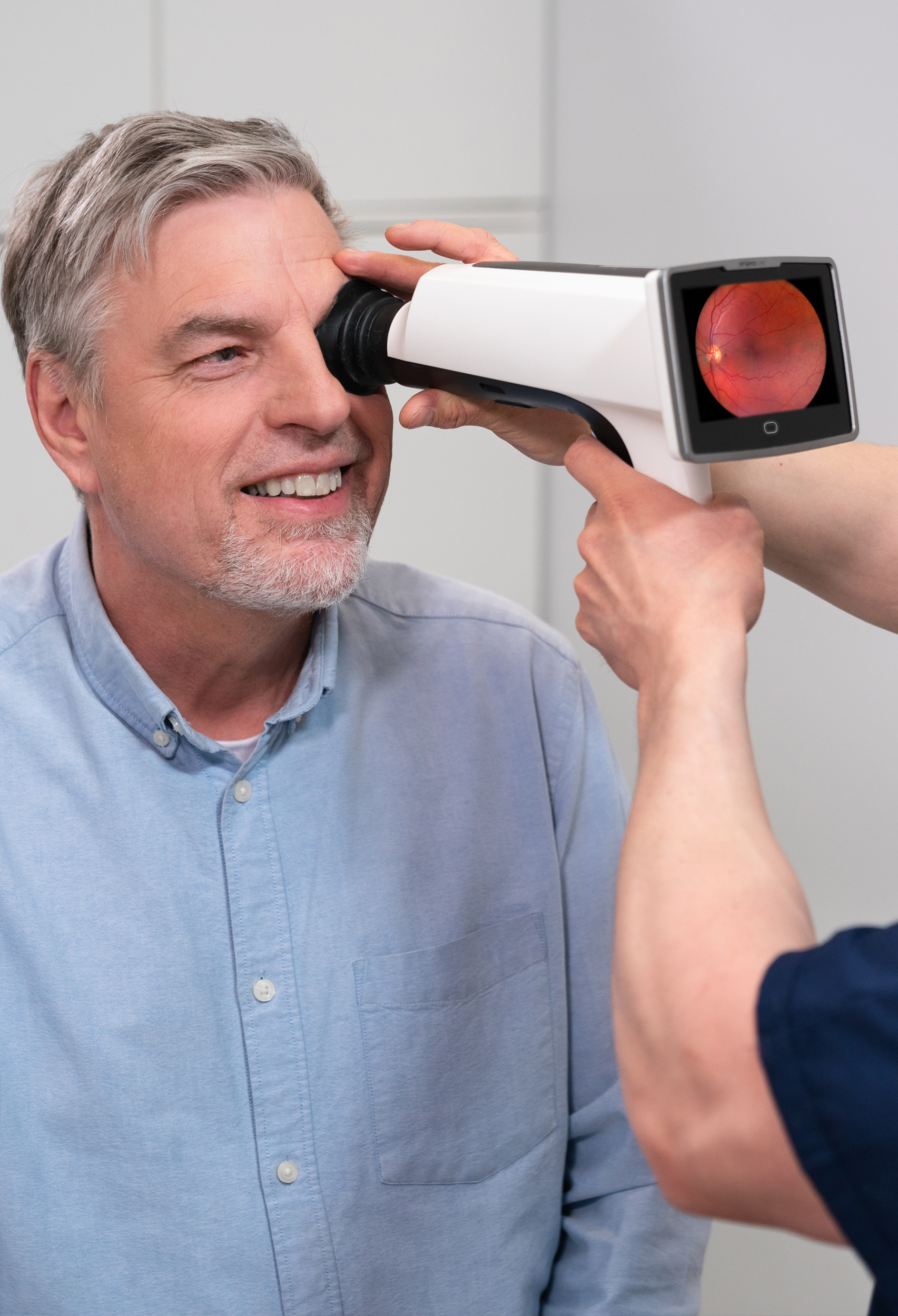
FROM DIABETES TO SYSTEMIC DISEASE
From Diabetic Eye Screening to Broader Health Insights
Retinal imaging is already routinely used in diabetic retinopathy screening around the world. People with diabetes are also at increased risk of cardiovascular, kidney and metabolic complications.
Recent research has shown that retinal changes can be associated with cardiovascular, metabolic and neurological conditions, as well as kidney function. In some cases, these changes may reflect systemic pathology before clinical symptoms become apparent elsewhere in the body.
Routine retinal imaging in people with diabetes therefore provides a practical starting point for looking beyond diabetic retinopathy. As retinal image analysis continues to advance, researchers are exploring how more information about systemic health could be derived from the same retinal image, potentially supporting broader point-of-care assessment.
ONE RETINAL IMAGE, MULTIPLE POTENTIAL HEALTH INSIGHTS
Systemic Conditions Associated with Retinal Biomarkers[1-3]
Cardiovascular Retinal vessel caliber, density and structure are associated with hypertension and cardiovascular risk. These microvascular characteristics may provide information about broader cardiovascular health. |
Kidney The retina and kidneys share microvascular characteristics. Retinal biomarkers have been associated with chronic kidney disease and measures of kidney function. |

Diabetes & Metabolic Diabetes can cause measurable changes in the retinal microvasculature. Research is also exploring retinal biomarkers associated with glucose, lipids and other cardiometabolic risk factors. |

Neurological The retina shares developmental and physiological similarities with the brain. Retinal biomarkers are being studied in neurodegenerative conditions, like dementia. |
What is Oculomics?
Oculomics explores what the eye can tell us about health beyond vision.
Oculomics is an emerging field that uses ocular biomarkers, including those derived from retinal imaging, to investigate systemic diseases and their risk factors.
By combining retinal imaging, large datasets and computational analysis, researchers are uncovering relationships between retinal features and conditions affecting other parts of the body.
Scaling Retinal Screening Beyond Traditional Eye Care
Portable retinal imaging with automated analysis create new possibilities for screening at scale.
Handheld retinal imaging allows images to be captured closer to where patients already receive care, including diabetes clinics, primary care, community screening and mobile settings.
As retinal image analysis advances, the same image may support increasingly broad health assessments. This creates opportunities to bring retinal screening into new care pathways and reach larger patient populations.

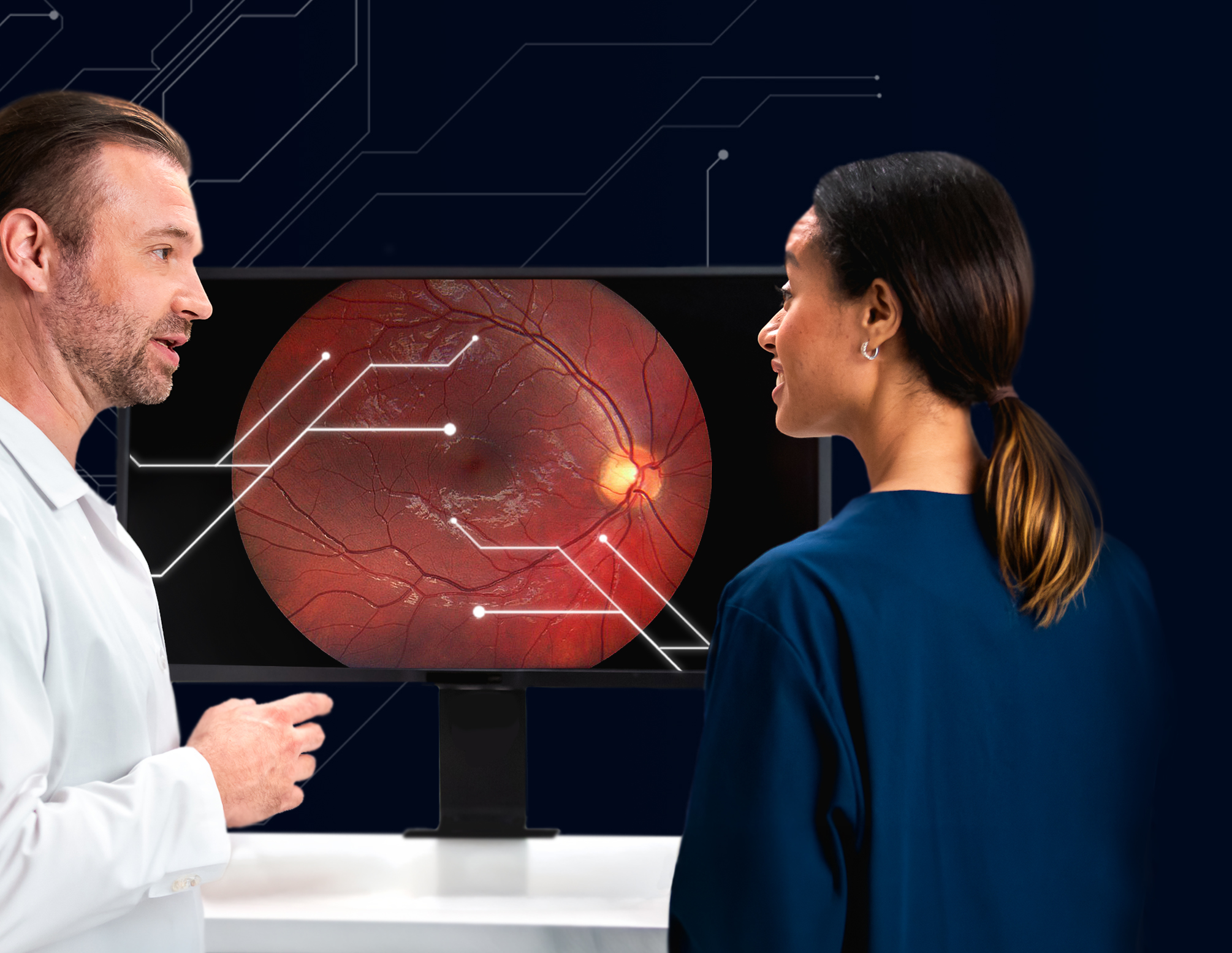
Enabling Screening Beyond Vision
The potential of oculomics depends not only on what AI can detect, but also on how widely retinal imaging can be made available.
Optomed’s handheld fundus cameras are designed to bring retinal imaging beyond traditional eyecare environments and closer to where patients already receive care.
Optomed provides a scalable imaging platform that combines retinal imaging, digital workflows and AI integration capabilities. The platform supports today’s screening needs and provides a foundation for future applications as oculomics develops.
Explore the Science Behind Oculomics
Oculomics is an emerging research field exploring how information from the eye can provide insights into systemic health.
Explore selected research behind the concepts discussed on this page.
Oculomics: Current concepts and evidence
1. Zhu Z, et al. (2025). Oculomics: Current concepts and evidence.
Prog Retin Eye Res. 2025;106:101350.
Current evidence and future opportunities across cardiovascular, neurological, renal and other systemic applications.
Evolution of Oculomics: From Naked Eye Observations to Artificial Intelligence over 100 Years
Ophthalmol Sci. 2026;6(4):101079
How retinal imaging has evolved from observation to quantitative biomarkers and AI-driven systemic prediction.
Insights into Systemic Disease through Retinal Imaging-Based Oculomics
3. Wagner SK, et al. (2020). Insights into Systemic Disease through Retinal Imaging-Based Oculomics.
Transl Vis Sci Technol. 2020;9(2):6
Foundational framework for retinal imaging-based oculomics and systemic disease research.
CONTACT US
Discover Screening Beyond Vision