Artificial Intelligence (AI) use is a large topic of interest in today’s news cycle. AI has the potential to revolutionize how healthcare is delivered, bringing increased efficiency, better outcomes, and more time for physicians to be with patients. You may be asking yourself, how can I trust AI to use in my healthcare practice? Will AI use in my practice be advantageous or worrisome? How do I know my results are accurate?’ Physicians emphasize the need for a feedback loop, data privacy assurances, seamless workflow integration, and adequate training and education as critical factors to build trust and increase AI adoption. Is there a solution out there that can ease the minds of decision makers and offer a trustworthy and secure product?
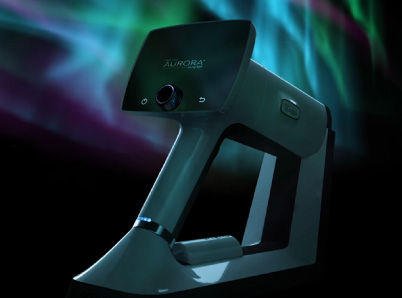
Currently Aurora AEYE is the only FDA cleared handheld fundus camera with integrated AI Diabetic Retinopathy (DR) screening available in the US. It has passed rigorous validity trials with US clinical data to be approved for use to detect more than mild diabetic retinopathy. Results are delivered to the camera screen in less than a minute – either signaling that the patient needs a referral to an eye care specialist for management and treatment, or if the patient is at low risk and able to be monitored again in a year for any diabetic changes. This puts the screening where the patients are – at their primary care appointment or other point of care setting. Making more effective use of the patients’ time and resources, increasing their likelihood of getting a diabetic eye exam, and closing HEDIS care gaps.
How accurate is the Aurora AEYE diagnosis for DR? How can I trust the results?
FDA clearance is based on two large-scale prospective phase-III studies, in which AEYE-DS demonstrated best-in-class efficacy and imageability. Diagnostic sensitivity was 93% and specificity was 94%. In both studies, over 99% of patients received a diagnostic result. The AI produced its diagnostic results using only a single image from each eye, rarely requiring dilation. This is higher than alternative AI DR screening systems on the market.
Sensitivity and specificity are measures of a test’s ability to correctly classify a person as having a disease or not having a disease. Sensitivity refers to a test’s ability to designate an individual with disease as positive. A highly sensitive test means that there are few false negative results, and thus fewer cases of disease are missed. The specificity of a test is its ability to designate an individual who does not have a disease as negative. A highly specific test means that there are few false positive results.
It is desirable to have a test that is both highly sensitive and highly specific. This is frequently not possible. Typically there is a trade-off. For many clinical tests, there are some people who are clearly normal, some clearly abnormal, and some that fall into the gray area between the two. Choices must be made in establishing the test criteria for positive and negative results.
How do I know that AI is HIPAA compliant?
Optomed takes cybersecurity and compliance with HIPAA, GDPR, HL7, and data privacy laws with the utmost seriousness. The company performs regular information security audits, third party penetration testing, and analysis of BAA partnerships, minimizing vulnerabilities in its information security systems.
Continual audits to evaluate and assess compliance of systems, policies and procedures against the 18 Standards and 44 Implementation Specifications of the HIPAA/HITECH Security Rule and to ensure the risks relating to the Administrative, Physical, and Technical Standards for securing electronic protected health information (EPHI) are mitigated to reasonable and appropriate levels through current controls and procedural changes enforced by policy.
This audit is part of the organization’s ongoing information security compliance effort. As policy, an information security audit is conducted every year or whenever any major technical, procedural, or legislative changes occur to ensure the organization is taking reasonable and appropriate actions regarding the security of information.
Are my patient’s photos being used to train the algorithm?
The AEYE-DS system is a closed-model deep learning system of artificial intelligence, which does not allow for outside input or adjustments once deployed. It was trained by ophthalmologists to identify biomarkers in the image and validated on patients within the United States during its clinical trials – ensuring that there was a large sample and variety of patients with a demographic diversity that reduces bias in the algorithm.
How is the AI system secure?
All data is stored on Azure servers within the US – leaning on the size, expertise, and might of Microsoft. Data stored on the Optomed service as well as the camera is encrypted at rest, and while in transit. Each camera contains a unique ID which is registered on the Optomed server, ensuring that only registered cameras can access the service, and its connection is protected with point-to point server-to-server interface. Users’ access to the cloud service is managed by username and password controls. HL7 compliance allows seamless integration from the cloud service to your EMR, continuing this unbroken chain of secure systems.
Physicians’ confidence in AI’s advantage for patient care remains strong and is on the rise. There has been substantial growth in physician use of AI in practice. An AMA poll found AI use cases nearly doubled (66% in 2024 vs. 38% in 2023). The dramatic increase in users in just one year is impressive and unusually fast for healthcare technology adoption.
Be wise with your adoption and look for proven solutions and entities that can provide peace of mind as well as help your bottom line. Aurora AEYE is FDA cleared, reimbursable with CPT code 92229, as well as meets HEDIS criteria for Comprehensive Diabetes Care measure.
Sometimes AI gets it wrong. We make sure it doesn’t happen to you. AI should be a tool for use to help in delivering higher quality care. AI is a crutch, not a couch – helping you to be more productive by being a powerful ally in patient care, not just having it do all the work unsupervised as you sit idly by. Aurora AEYE is a powerful tool that is accurate, secure, and works with you to improve outcomes and outflow. Improve your organization with Aurora AEYE today.
Share this insight