How can healthcare organizations more easily meet HEDIS measures for diabetic eye exams? Less than half of patients with diabetes comply with their annual eye screening requests. For a leading primary care network staffed by internists, family physicians, and nurse practitioners, diabetic retinopathy screening had become a critical problem. Despite their commitment to value-based care, Cary Medical Management and their eight clinics across central North Carolina weren’t passing retinal exam measures for any of their ACOs or Medicare Shared Savings programs. Patti Holston, VP of Operations at Cary Medical Management knew that something had to change.
“Before the Aurora AEYE became available to us, we were not passing the retinal exams for diabetics measure for any of the ACOs we work with or for the managed Medicare shared savings plan,” explained Holston. “So, we knew we needed to do something.”
The barriers were clear: it was inconvenient for older, less mobile, rural, or busy patients to get to an ophthalmologist for retinal scans. Traditional tabletop screening equipment had failed in their practices where bulky machines sat underutilized, taking a precious exam room and requiring physician time to operate and review. “We knew that there were people who needed care they weren’t receiving.”
The Solution: Optomed Aurora AEYE
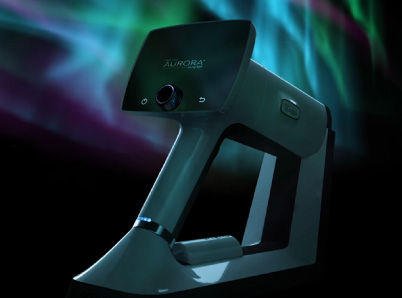
After evaluating their options, the network chose the Optomed Aurora AEYE, a handheld, nonmydriatic, AI-enabled fundus camera built for screening diabetic retinopathy.
“The Aurora AEYE is mobile. We wander around the clinic wherever the patients are. It does not require a physician’s presence,” Holston noted. “Our MAs have been trained to perform the exam, and it fits into our philosophy of primary care enhanced by technology.”
What set the Aurora AEYE apart from competitors? The AI capability was crucial. With a single image per eye captured by a non-physician, the FDA cleared camera and algorithm delivers a result to the camera in less than a minute of:
- Negative for more than mild diabetic retinopathy: retest in 12 months
- More than mild diabetic retinopathy is detected: refer to an eyecare professional
- Insufficient image quality: retake(s) needed.
With high accuracy of this system performance of 93% sensitivity, 94% specificity, and 99% imageability, the team can trust the results. This interoperability allows medical decision makers to get high quality information at the point of care. Patients that show signs of treatable DR can get more urgent referrals to eye care specialists while those that don’t can be monitored by their primary care physicians.
“There are other handhelds on the market. The Aurora AEYE has rapid feedback from the AI, and its accuracy rate is higher than a human rate, as most AI is. So that was easy for us because, remember, we were driven to take care of our patients, to get their eyes taken care of and to show the ACOs look, we’re taking care of their eyes.”
Grading accuracy for diabetic retinopathy is highly consistent across human graders, demonstrating that the task is standardizable and well‑suited for automation. This helps explain why AI systems, like the Aurora AEYE, can deliver faster, more reliable, and often higher‑than‑human accuracy, providing immediate feedback and improving care quality at scale.
Implementation: Seamless Integration into Workflow
The implementation process exceeded expectations. With on-site or virtual training and plenty of resources including videos and guides. “It was amazing. It was thorough. It was complete.”
The handheld design made screening effortless to incorporate into routine visits. As they described it: “You just do it as part of blood pressure, weight, temperature, vitals. The MA who brings you from the waiting room back to the exam room knows your diagnosis, and they go, ‘oh, you’re diabetic. Have you had retinal screening in the last year? No. We’d like to do that for you here today.’ It takes five minutes. That’s how it gets done.”
Providers embraced the technology immediately. “There was never a need to build confidence when they saw those scans. They get a picture of the scans so they can see for themselves… There was never an implementation or adaptation barrier with the providers.” The Aurora AEYE is secure, can integrate with any EMR system, and creates a seamless experience for the patient.
The Results: Immediate Clinical Impact
The clinical impact was immediate and dramatic. “The first three months we had it in place, one out of every three people that we scanned had retinal changes and had to be sent to a retina specialist. So not only was it a good choice for us from meeting standards, but it was a good choice for us from a patient care standpoint.”
The ability to show patients their results in real-time transformed patient conversations. “The ability to look at a patient with a scan and go, you have to go to the retinal specialist. It’s one thing to say, you’re diabetic, and these are things you need to be concerned about. It’s another to have a scan standing there and tell them you’re starting to show some changes. This has been reviewed, and you need to see a retina specialist for next steps in treatment.” Inadequate health literacy has been associated with lower patient satisfaction, lower preventive service compliance, higher healthcare utilization and expenditures. Being able to enhance health literacy by having a tool like a report of their diabetic eye health empowers patients, ultimately leading to higher adherence rates and better health outcomes.
Quality Metrics and Financial Performance
The impact on quality metrics was significant: “The quality metrics have improved by a good 15 to 20%.” But the benefits extended far beyond HEDIS scores. “It certainly made it easier to provide full service primary care when you have all the information in the chart. If you know that their retinas are in trouble, then you need to be perhaps stepping up surveillance on some other measures of health for diabetic patients.”
The network’s cost savings were remarkable. “We save more money in the Medicare Shared Savings program than anybody in the state. And we’re one of the highest performers in the country.
How? By catching problems early and reducing unnecessary specialist visits; benefiting from value-based healthcare reimbursement models. “If you’re diabetic and you don’t have retinopathy, you’re not paying for an ophthalmologist visit. If you do have retinopathy, you’re getting care early enough that it’s not expensive, as expensive, and perhaps not as invasive. And it’s part of full-service primary care.” Value-based healthcare is a model that couples reimbursement based on patient health outcomes, quality of care, and cost efficiency, rather than the volume of services provided. It aims to improve patient health, reduce unnecessary hospitalizations, and lower costs through preventative care, better coordination, and patient-centered, evidence-based practices.
Value-based reimbursement models aren’t the only way to turn diabetic retinopathy screening into a profitable tool in an organizations’ toolbox. HCPCS CPT code 92229 (Imaging of retina for detection or monitoring of disease; point-of-care automated analysis and report, unilateral or bilateral) averages about $40 reimbursement from Medicare and can be much more from private payors. This ensures that the cost of the camera and service is easily recouped, and additional screens generate profit for the organization.
Scalability Across Multiple Practice Settings
With eight centers spread across the state, the solution proved entirely scalable. “We chose to put an Aurora AEYE in each center so that it didn’t travel. We talked about traveling with some of our traveling physicians, but we were using it so much and getting such good results that we felt like we owed it to every patient to have a scan.”
This was especially critical in rural areas. “In some of the rural areas where we have practices, there aren’t ophthalmologists, so it would be a challenge for some of those people to get care. We’re screening them. We can tell them, you’re going to need to go ahead and drive that hour and a half to the eye care specialist.”
The Bottom Line
When asked to describe the value of the Aurora AEYE to their organization and patients, the answer was simple: “Essential. We’ve become dependent on it.” Aurora AEYE is FDA cleared, reimbursable with CPT code 92229, as well as meets HEDIS criteria for Comprehensive Diabetes Care measure.
Their advice to other healthcare leaders? “Do it. It has been cost effective for us. It has been a patient satisfaction enhancement, and it has been a training tool for our staff so that they have another set of skills in their toolbox. So, all the way around it’s been a win. And the providers are much happier with it.”
The Aurora AEYE delivered on every front: improved patient care, enhanced HEDIS compliance, increased operational efficiency, and significant financial benefit. Empowering primary care teams with the tools they need to deliver comprehensive, value-based care.
Ready to transform diabetic retinopathy screening in your practice? Contact us to learn more about the Optomed Aurora AEYE and schedule a demonstration.
Share this insight